How to Add a Late Fee to an Invoice
A late-fee calculation does not establish a right to charge it. Start with the agreement, applicable law and verified overdue balance, then document the arithmetic.
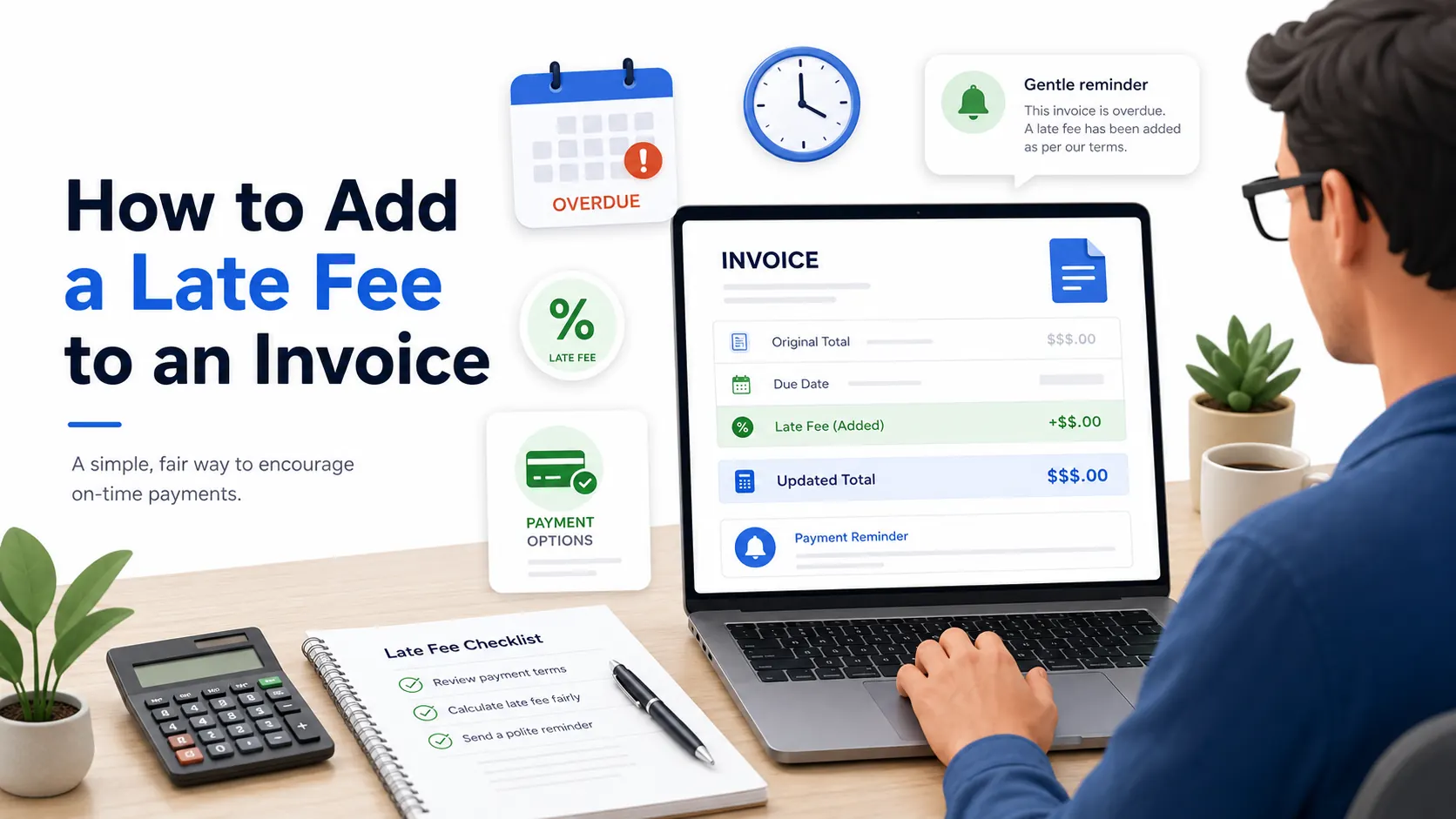
Should you charge a late fee?
Not automatically. First confirm that the invoice reached the right person, that payments and credits are reconciled, and that the amount is genuinely overdue. A missing purchase order or a disputed deliverable needs a different response from a client who has acknowledged the debt. Use the follow-up workflow to identify the problem before escalating it.
How much can you charge?
There is no universal default. Jurisdiction, customer type, the contract and the distinction between interest and a penalty can affect what is permitted. Do not assume 1.5% per month is safe merely because it appears in an example. For a jurisdiction-specific contrast, GOV.UK explains statutory interest for qualifying UK business debts and its relationship to contractual interest. That rule is not a US or worldwide rate. Obtain appropriate local advice when the basis is unclear.
Flat fee vs percentage
| Type | Example | Check before use |
|---|---|---|
| Percentage per month | 1.5% of the overdue balance | Hypothetical rate only; verify the permitted basis and period |
| Flat fee | $25 per late invoice | Hypothetical amount only; check penalty and consumer rules |
| Greater of the two | $25 or 1.5%, whichever is higher | Do not combine charges without a valid basis |
How to calculate it
As arithmetic only, 1.5% of a $2,000 overdue balance is $30 for one full monthly period. Two full periods at simple interest on the unchanged principal would be $60. This does not authorize that rate or establish how partial periods or compounding should work. Check the basis before using our late fee calculator, and compare its assumptions with your agreement and applicable law.
What to put on the invoice and contract
Clear disclosure helps establish what was agreed, but is not sufficient by itself to make a fee enforceable. Where a lawful policy is appropriate, keep consistent terms in these places:
- On the invoice: a clear reference to the valid agreed terms, including the rate or amount, basis and any grace period.
- In your contract or engagement terms: the same policy, agreed before the work starts, so the client cannot claim they never saw it.
When payment is late
Follow up professionally, using timing appropriate to the agreement and local requirements. There is no universal two-week escalation schedule. Our payment reminder generator helps draft wording; it does not send a legal notice or determine your rights. If a charge is valid, document its basis, dates, principal and calculation separately. Preserve the original invoice rather than silently overwriting the amount already sent.
Calculate a late fee in seconds
Model a fee under the calculator's assumptions, then check those assumptions against the applicable agreement and law.
Open the late fee calculator