How to Invoice as a Freelancer
A clear, professional invoice is the difference between getting paid in a week and chasing money for two months. This guide walks through exactly what to put on a freelance invoice, how to set terms, which payment methods get you paid fastest, and how to deal with clients who pay late.
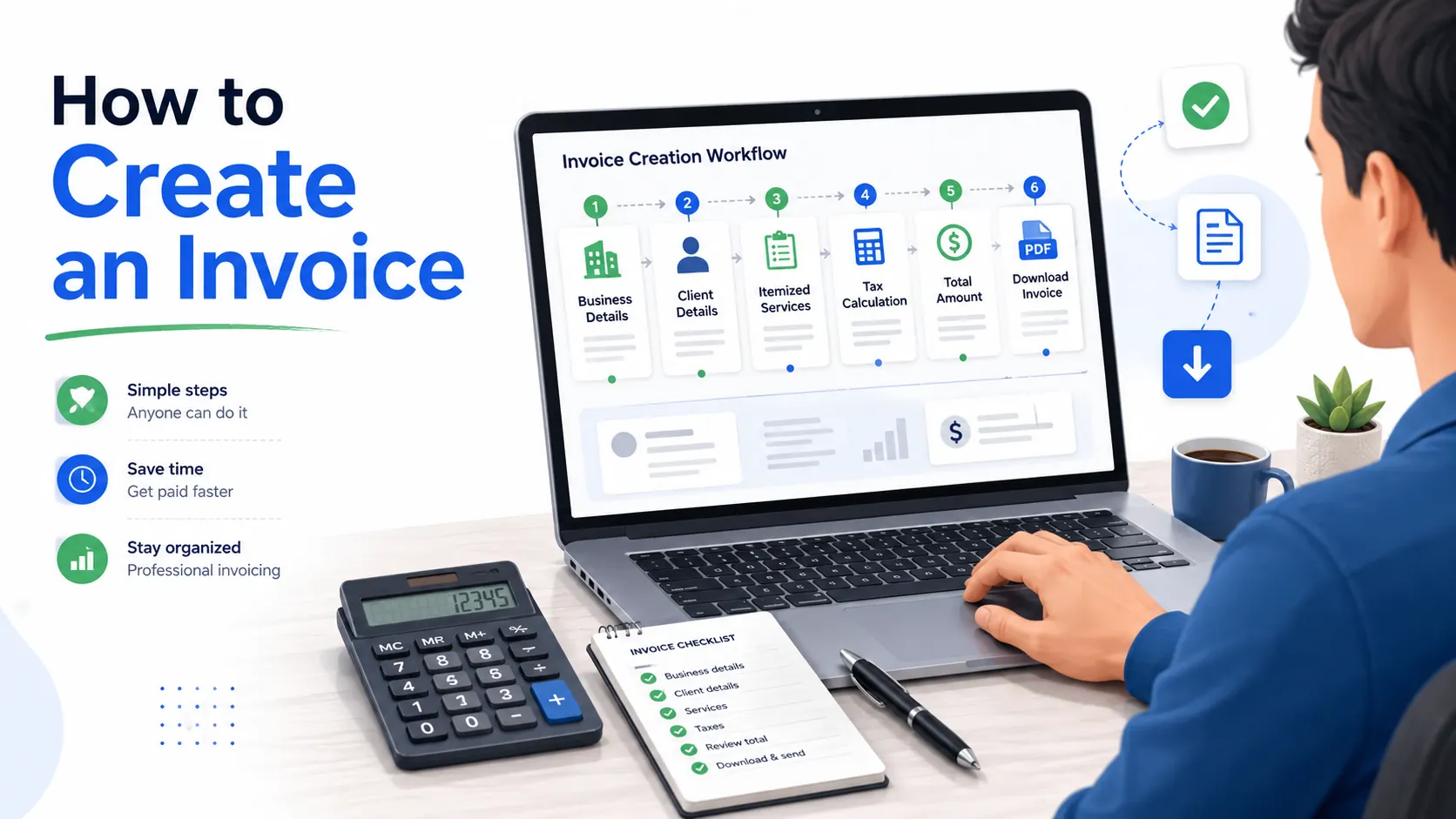
What every freelance invoice should include
An invoice is a formal request for payment, and it should leave no room for confusion. Whether you build it by hand or use our free invoice generator, make sure each invoice has these elements:
- The word "Invoice" and a unique invoice number. Numbering sequentially (INV-001, INV-002) keeps your records clean and makes follow-up easy.
- Your details: your name or business name, address, email, and phone. If you operate as an LLC or sole proprietor under a business name, use it consistently.
- The client's details: the company name, the specific person or accounts-payable contact, and their billing address. Sending an invoice to the wrong inbox is the most common reason payments stall.
- Issue date and due date. Always show a real calendar due date, not just "Net 30."
- Itemized line items: a description of each piece of work, the quantity or hours, the rate, and the line total. Specific descriptions ("Homepage redesign - 12 hours") reduce disputes. Billing by the hour? Time card to invoice turns tracked hours into these line items automatically.
- Subtotal, tax, and total due. Most US freelancers providing services do not charge sales tax, but rules vary by state and by what you sell, so confirm your obligations.
- Payment instructions: exactly how the client should pay you, including any account details or a payment link.
- Notes or terms: your late-fee policy, a thank-you, or a reference to the contract or purchase order.
Understanding net terms
"Net terms" tell the client how long they have to pay. Net 30 means 30 days from the invoice date; Net 15 and Net 7 are shorter. Longer terms like Net 45 or Net 60 are common with large corporations but are tough on a freelancer's cash flow, so negotiate them down where you can.
As a rule, shorter is better for you. Many independents default to Net 14 or even "due on receipt" for small jobs, and reserve Net 30 for larger clients who require it. Whatever you choose, calculate the exact due date so there is no ambiguity - our invoice due date calculator turns any net term into a calendar date in one click. You can also offer a small early-payment discount, such as "2/10 Net 30" (a 2% discount if paid within 10 days), to nudge clients to pay sooner.
Choosing payment methods
The easier you make it to pay, the faster you get paid. Each US method has trade-offs:
- ACH bank transfer: the workhorse for larger US invoices. Fees are low or zero and it is reliable, though it can take 1-3 business days to clear. Ideal for ongoing client relationships.
- Zelle: fast and free between US bank accounts, with no processing fee. Good for trusted clients and mid-size amounts, but transfers are effectively irreversible, so use it where there is trust.
- Venmo: convenient for smaller, informal jobs. Use a business profile if you bill through it; personal-account business use can violate the terms and complicates bookkeeping.
- PayPal: widely accepted and good for international or first-time clients because of buyer and seller protection, but it charges a processing fee (roughly 3% plus a fixed amount) that eats into your margin. Decide in advance whether you absorb that fee or build it into your rate.
- Credit card links: the most frictionless option for clients, at a card-processing cost of around 3%. Worth it when speed matters more than the fee.
A practical setup: offer ACH as your default for invoices over a few hundred dollars, and accept a card or PayPal for smaller or international work. Note any processing fees clearly so a client cannot short-pay you and call it even.
How to get paid faster
Late payment is rarely about malice; it is usually about friction and forgetting. You can remove most of both:
- Invoice immediately. Send the invoice the day the work is delivered, while the value is fresh in the client's mind.
- Use short terms. Net 14 instead of Net 30 can halve your average wait with no downside for most clients.
- Ask for a deposit. For larger projects, bill 30-50% upfront and the balance on delivery. This protects your cash flow and filters out clients who never intended to pay.
- Send a friendly pre-due reminder. A short note a few days before the due date dramatically improves on-time payment.
- Make payment one click. Include a payment link or your account details directly on the invoice.
Handling late payments and late fees
When an invoice goes past due, follow up promptly and professionally. A calm reminder on day one past due, a firmer note a week later, and a final notice after two weeks is a reasonable cadence. Our payment reminder generator drafts each of those for you so you do not have to find the words.
A late fee gives clients a concrete reason to pay on time. A common structure is 1.5% per month (about 18% annually) on the overdue balance, but you must state the policy on the invoice and ideally in your contract before work begins, and you should confirm your state's legal maximum. Use our late fee calculator to work out the charge. Apply fees consistently but with judgment; for a good long-term client a polite nudge often works better than a penalty.
Keep records as you go
Save a copy of every invoice and note when it was paid. These records feed directly into your Schedule C at tax time and make it easy to spot which clients consistently pay late. Sequential invoice numbers and a simple paid/unpaid log are enough for most solo freelancers.
Create your first invoice now
Build a clean, professional invoice in under a minute - free, no signup, no watermark, and your data stays in your browser.
Open the invoice generator